Indian Diet Plan for Cancer Patients (Simple & Practical)
Food plays a very important role during cancer treatment and recovery. While diet alone cannot cure cancer, the right nutrition helps the body stay strong, improves immunity, reduces treatment side effects, and supports faster healing.
For Indian patients, a simple home-cooked diet is often the best choice. This guide will help you understand what to eat, what to avoid, and how to maintain proper nutrition during cancer care.
Why is Diet Important for Cancer Patients?
Cancer treatments such as chemotherapy and radiation therapy can affect appetite, digestion, and overall strength. Many patients experience fatigue, nausea, weight loss, or weakness.
A balanced diet can help to:
- Maintain strength and body weight
- Improve energy levels
- Support the immune system
- Reduce side effects of treatment
- Help the body recover faster
Key Principles of a Cancer-Friendly Indian Diet
Before following any diet plan, it’s important to keep these basic guidelines in mind:
Eat Fresh, Home-Cooked Food
Fresh meals are easier to digest and safer, especially when immunity is low.
Focus on Balanced Nutrition
Include carbohydrates, proteins, healthy fats, vitamins, and minerals in your daily meals.
Eat Small, Frequent Meals
Instead of 2–3 large meals, aim for 5–6 smaller meals throughout the day.
Stay Well Hydrated
Drink plenty of fluids like water, coconut water, soups, and fresh juices.
Personalize Your Diet
Every patient’s needs are different. Diet should be adjusted based on treatment type and symptoms.
Simple Indian Daily Diet Plan
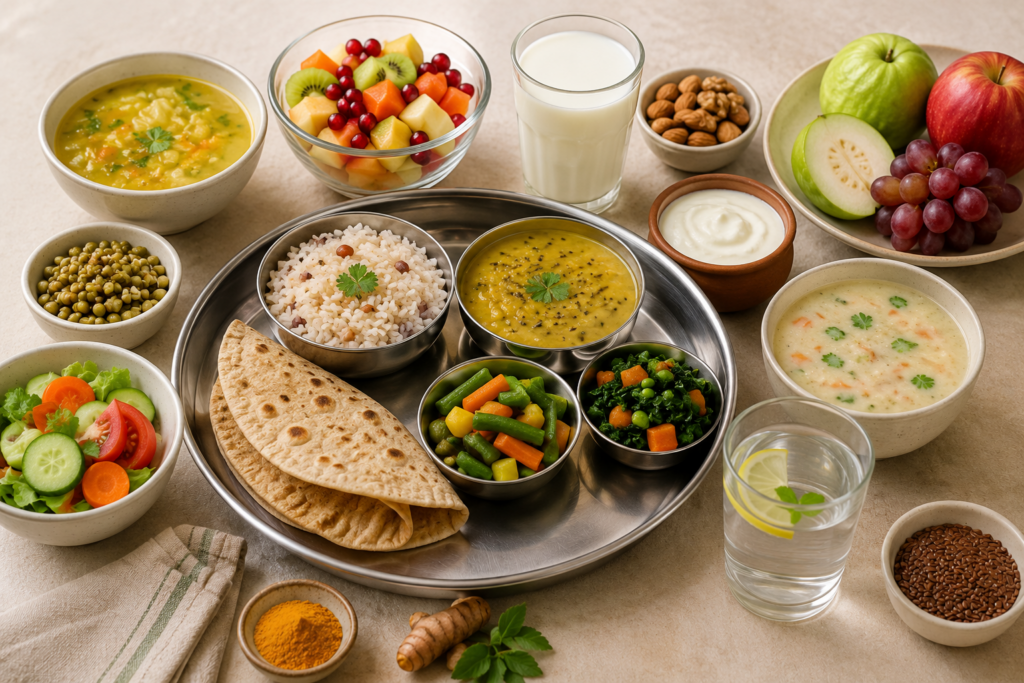
Here’s a practical and easy-to-follow meal plan for cancer patients:
Early Morning (6:30–7:30 AM)
- Warm water with a few drops of lemon
- 4–5 soaked almonds or walnuts
- Herbal tea or light green tea
Breakfast (8:30–9:30 AM)
- Vegetable poha / upma / oats
- Idli with sambar
- Whole wheat toast with paneer or peanut butter
- One fruit (banana, apple, or papaya)
Mid-Morning Snack (11:00 AM)
- Coconut water or buttermilk
- Seasonal fruit bowl
- Fresh vegetable juice (carrot, beetroot, tomato)
Lunch (1:00–2:00 PM)
- 1–2 chapatis or small portion of rice
- Dal or lentils (protein source)
- Cooked vegetables (lauki, beans, carrot, etc.)
- Curd or buttermilk
- Salad (only if tolerated)
Evening Snack (4:30–5:30 PM)
- Roasted chana or makhana
- Vegetable or clear soup
- Herbal tea
Dinner (7:30–8:30 PM)
- Light meal like khichdi, dal-rice, or vegetable daliya
- Soft chapati with sabzi
- Soup-based meals if appetite is low
Bedtime (10:00 PM)
- A glass of warm milk (if tolerated)
- Turmeric milk (haldi doodh) for added immunity
Best Foods for Cancer Patients
Choosing the right foods can help improve strength and recovery.
Protein-Rich Foods
Protein helps repair tissues and maintain muscle mass.
- Dal, paneer, curd, milk
- Eggs, chicken, fish (if non-vegetarian)
- Soy products and legumes
Fruits and Vegetables
Rich in vitamins and antioxidants.
- Spinach, carrot, beetroot, broccoli
- Apple, banana, papaya, pomegranate
Whole Grains
Provide energy and fiber.
- Brown rice, oats, whole wheat
- Millets like jowar, bajra, and ragi
Healthy Fats
Support energy and overall health.
- Nuts, seeds
- Ghee (in moderation), olive oil
Foods to Avoid During Cancer Treatment
Certain foods can worsen symptoms or slow recovery:
- Processed and junk food (chips, packaged snacks, fast food)
- Excess sugar and sweets
- Fried and very spicy food
- Alcohol and tobacco
- Raw or unhygienic food, especially street food
Managing Common Eating Problems During Treatment
Treatment side effects can make eating difficult, but small changes can help.
Loss of Appetite
Eat small portions more frequently and include foods you enjoy.
Nausea and Vomiting
Choose light foods like khichdi, toast, or soups.
Mouth Sores
Avoid spicy and acidic foods; opt for soft and cool meals.
Weakness and Fatigue
Include protein-rich and energy-dense foods to maintain strength.
Why Personalized Diet Guidance Matters
Each patient’s nutritional needs are different and depend on:
- Type and stage of cancer
- Treatment method (chemotherapy, radiation, surgery)
- Overall health condition
Consulting a specialist helps ensure that the diet is safe, effective, and tailored to individual needs.
Expert Cancer Care and Nutritional Support
For complete cancer care along with proper dietary guidance, it is important to consult an experienced specialist.
You can consult Dr. Jagdish Shinde, a trusted Radiation Oncologist in Pune, who provides comprehensive cancer treatment with a patient-focused approach. Patients receive advanced care along with proper lifestyle and nutrition guidance.
Conclusion
A simple, balanced Indian diet can make a big difference during cancer treatment and recovery. Fresh home-cooked meals, proper hydration, and mindful eating habits help improve strength, reduce side effects, and enhance overall well-being.
Right nutrition, combined with the right medical care, can significantly support recovery and quality of life.
If you or your loved one is undergoing cancer treatment, don’t ignore the importance of diet—small changes can lead to better outcomes.
Contact Details
Address:
Bus Stop, Fortuna Business Center, Shop No. 305 Cancer Care, in front of Shivar Chowk, Pimple Saudagar, Pimpri-Chinchwad, Maharashtra 411027
Phone: +919890233887
Recent Posts
-
 What Not to Say to a Loved One With Cancer: A Guide for Well-Meaning Friends and Relatives in Pune
 -
 “Will I Lose All My Hair?” A Patient-to-Patient Guide to Managing Hair Loss, Wigs, and Self-Esteem During Chemo.
 -
 How to Tell Your Family You Have Cancer: A Compassionate Guide to Having the Hardest Conversation of Your Life
 -
 Is Cancer Increasing in Young Adults? Here’s the Shocking Truth
 -
 Indian Diet Plan for Cancer Patients (Simple & Practical)