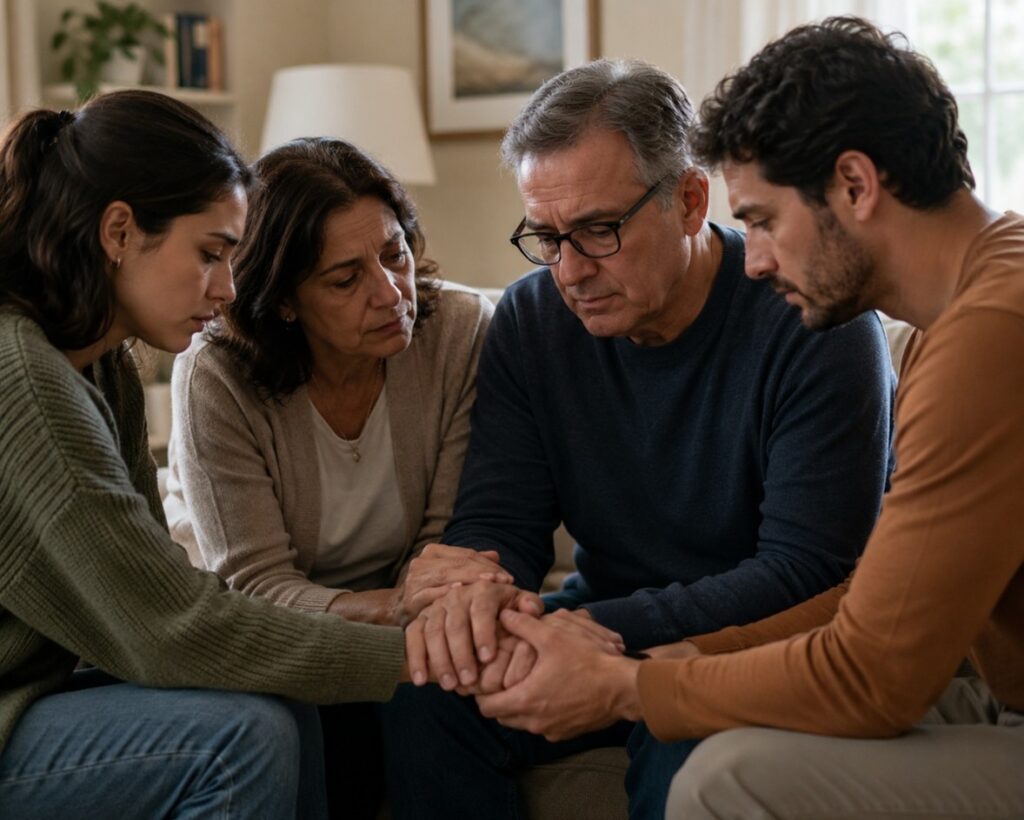
How to Tell Your Family You Have Cancer: A Compassionate Guide to Having the Hardest Conversation of Your Life
The clock on the wall at the Fortuna Business Center in Pimple Saudagar seemed to tick louder than ever before. Outside, the familiar hum of the Wakad–Nashik Phata BRTS road continued as usual, but inside the clinic, time had completely frozen. You are holding a medical report, and a single word stands out, rewriting your entire reality: Cancer.
Receiving a cancer diagnosis is an emotional earthquake. But for many patients, the scariest part isn’t the upcoming treatment or the medical jargon—it’s the daunting task of breaking the news to the people they love most. How do I say it? Will they break down? How do I comfort them when I need comfort myself?
If you are facing this crossroad, please take a deep breath. You do not have to carry this weight perfectly. Drawing from global counseling insights from institutions like Macmillan Cancer Support, CancerCare.org, and India’s premier bodies like the Tata Memorial Centre (TMC) and Indian Cancer Society (ICS), we have created this compassionate blueprint to help you navigate the hardest conversation of your life.
Step 1: Process Your Own Emotions First (The “Oxygen Mask” Rule)
Before you can share a burden, you need to understand its weight. Experts at the American Cancer Society emphasize that there is no rush to tell everyone immediately.
Give yourself a few days to cry, scream, question, or simply sit in silence. You don’t need to have all the answers right now. If you feel overwhelmed by the medical details, consider scheduling an Online Oncologist Consultation to clarify your diagnosis, staging, and next steps. Knowing the facts gives you a stable foundation when explaining things to your family.
Step 2: Choose Your Inner Circle and Settings
You do not owe your medical history to the world all at once. Start with your core support system—your spouse, adult children, or closest siblings.
- The Right Setting: Choose a quiet, private, and comfortable environment where you won’t be interrupted by phone calls or visitors.
- The Right Time: Avoid high-stress periods (like right before someone leaves for work or school exam days). A weekend evening often works best, allowing everyone time to process the emotions overnight.
Step 3: Tailoring the Conversation for Different Family Members
Different generations process grief uniquely. Organizations like CanSupport India and Cancer Patients Aid Association (CPAA) recommend breaking down your communication strategy based on who you are talking to:
- Talking to Your Spouse or Partner
Your partner is your co-pilot. Be completely honest with them. Use simple, direct words: “I received my biopsy results today, and it is cancer.” Allow them to cry, show fear, or even go numb. Remind them that you are a team and will face the path forward together.
- Talking to Young Children or Teenagers
Children are incredibly perceptive; they will notice changes in your mood or routine. Breastcancer.org and Cancer.net (ASCO) advise against keeping secrets, as children often imagine scenarios worse than reality.
- For young kids: Keep it simple. “Mommy/Daddy is sick with a disease called cancer. The doctors have a good plan to give me medicine to help me get better.”
- For teenagers: Give them more details but reassure them that it is not their fault, and their daily routines (school, hobbies) will be preserved as much as possible.
- Talking to Elderly Parents
Indian families are fiercely protective of their elderly parents. You might worry about their health reacting to the shock. Present the news alongside a solid treatment framework. Focus heavily on the solution: “I have been diagnosed with an illness, but I am under the care of the Best Oncologist in Pune, and we are starting an effective treatment layout right away.”
Multimedia: Quick Checklist for the Conversation
(Digital Marketing Note: Insert a clean, downloadable visual infographic here for high user engagement)
┌────────────────────────────────────────────────────────┐
│ THE 4-POINT CONVERSATION CHECKLIST │
├────────────────────────────────────────────────────────┤
│ 1. The Diagnosis: State it clearly without jargon. │
│ 2. The Plan: Explain the treatment steps simply. │
│ 3. The Hope: Focus on the care team and recovery. │
│ 4. The Request: Tell them exactly how they can help. │
└────────────────────────────────────────────────────────┘
Step 4: Expect Diverse Reactions (And Give Grace)
Grief does not look uniform. When you break the news, your family members might react in ways you didn’t expect:
- Denial: “Are you sure the lab didn’t mix up the reports? Let’s get another test.”
- Anger: “Why is this happening to us? What did we do wrong?”
- Practicality: Quietly shifting into ‘fix-it’ mode, asking about finances, insurance, and cooking schedules.
According to the Cancer Support Community, all these reactions are forms of coping. Do not feel pressured to manage their emotions. Let the tears flow; it is the first step toward collective healing.
Step 5: Pivot the Conversation Toward the Action Plan
The best way to diffuse overwhelming fear is to introduce an actionable path to recovery. This is where you transition from despair to proactive medical management.
Reassure your family that India’s cancer care infrastructure has evolved exponentially, combining global standards with localized care. Introduce them to your care team. Share that options like advanced Radiation Therapy, modern Chemotherapy cycles, and targeted Cancer Surgery are highly effective and safely accessible right here in Pune.
If the journey ahead involves symptom management or keeping your comfort a priority, explain how Palliative Care works alongside active treatment to improve quality of life.
Final Thoughts: You Are Not Alone
The word ‘Cancer’ brings fear, but the words ‘Family’ and ‘Medicine’ bring hope. Having this conversation breaks the isolation of a diagnosis and opens the door to a community of love that will sustain you through every phase of healing.
If you or your loved ones have questions about an upcoming treatment journey, need a second opinion, or want to consult a trusted Cancer Specialist, we are here to support you with clarity, clinical excellence, and deep empathy.
About Dr. Jagdish Shinde
When dealing with cancer, you deserve a medical expert who blends world-class training with compassionate clinical care. Dr. Jagdish Shinde is recognized as one of the most trusted names in oncology. He completed his MBBS from the prestigious B. J. Medical College, Pune, and pursued his postgraduation (MD and DMRT) in Radiation Oncology from the esteemed Government Medical College and Regional Cancer Centre, Thiruvananthapuram, where he stood First in the University. As a primary investigator in multiple international clinical trials, Dr. Shinde brings cutting-edge advancements directly to his patients in Pune.
Contact Cancer Care Pune
- 📍 PCMC Address: Shop no, Fortuna Business Center, 305, Wakad – Nashik Phata BRTS Rd, Shivar Chouk, Pimple Saudagar, Pune 411027
- 📞 Phone: +91 9890233887
- 🌐 Website: www.cancercarepune.com
Recent Posts
-
 How to Tell Your Family You Have Cancer: A Compassionate Guide to Having the Hardest Conversation of Your Life
 -
 Is Cancer Increasing in Young Adults? Here’s the Shocking Truth
 -
 Indian Diet Plan for Cancer Patients (Simple & Practical)
 -
 Can Cancer Be Detected in a Simple Blood Test Like a Liquid Biopsy?
 -
 Radiation Therapy Side Effects: A Clear and Honest Guide for Patients